24/02/16

WANITA TELAH MENGHENTIKAN CAHAYA


SEORANG WANITA TELAH MENGHENTIKAN CAHAYA
Oleh: Jum’an

Cahaya itu sungguh luar biasa, dengan kecepatannya yang lebih dari satu setengah milyar kilometer per jam, dia haya butuh waktu 8 menit untuk menempuh jarak 150 juta kilometer dari rumahnya dimatahari kerumah saya di daerahTanah Abang Jakarta. Menurut genius Einstein kecepatan cahaya adalah konstan dan mutlak. Tidak ada suatu apapun dijagat raya ini yang bisa menyamai apalagi melebihi kecepatan cahaya. Yang sulitnya lagi masuk akal orang awam, menurut teorinya bila kita dapat mendekati kecepatan cahaya, waktu kita menjadi renggang dan longgar, seperti orang bermimpi: dalam sedetik sudah bisa berkelana kemana-mana. Hebatlah pokoknya cahaya itu… Einsteinlah promotornya, dan ilmuwan sedunia pun mengakui dan mendukungnya. Sampai ketika 15 tahun yang lalu datang seorang wanita semampai umur 40an kelahiran Denmark muncul sebagai pahlawan baru. Ia adalah Lene Hau, professor fisika dari Universitas Harvard telah menghasilkan sesuatu yang menurut Einstein sungguh tidak mungkin dikerjakan.

Pada tahun 1999 ia berhasil memperlambat kecepatan cahaya menjadi hanya 17 meter perdetik dan pada 2001 ia berhasil menghentikannya sampai full stop, lalu melepaskannya kembali sampai kecepatan penuh. Itu dilakukannya dengan cara melewatkan seberkas cahaya kedalam kabut atom pada suhu ultra rendah dalam ruang vakum sampai tekanan 100 trilyun kali lebih rendah dari tekanan udara terbuka. Pokoknya cahaya takluk didepan wanita kelahiran Denmark ini. Professor Lene Vestergaard Hau menerima hadiah 500,000 dollar untuk temuan dari eksperimennya itu serta sebuah laboratorium khusus di Harvard untuk meneruskan cita-citanya. Sesudah cahaya yang perkasa takluk dihadapannya, lalu apa?

Manfaat nyata yang akan datang diantaranya adalah kemungkinan diciptakanya komputer kwantum yang konon bakalan jauh lebih canggih dibanding komputer masa kini. Juga memungkinkan dirumuskannya sandi-sandi yang tidak mungkin dapat dibongkar orang. Lalu kapan itu? Kalau jarak waktu antara teori relativitas ditulis oleh Albert Einstein sampai diciptakannya bom atom dibutuhkan waktu sampai tiga puluh tahun, sekarang tidak lagi. Waktu untuk merubah temuan ilmiah menjadi produk industri sekarang ini tidak perlu ber-lama-lama. Science today, technologi tomorrow kata orang…

20/02/16

ABAD 21 ZAMAN GRAFENA


ABAD KE 21 ADALAH ZAMAN GRAFENA
Oleh: Jum’an

Tahukah anda bahwa berlian yang 100 karat (20 gram)  laku sampai 20 juta dolar dan isi batang pensil yaitu grafit yang 20 gram hanya laku beberapa ribu rupiah adalah dua bahan yang sama? Keduanya terdiri dari atom-atom karbon yang identik sama. Hanya susunannya saja yang berbeda. Dalam berlian, atom-atom karbon saling terikat kuat dalam bentuk tetrahedrons tiga dimensi, sedangkan dalam grafit, atom-atom itu saling terikat kuat dalam lapisan-lapisan dua dimensi berbentuk cincin heksagonal (segi-enam)  dimana kekuatan ikatan antara lapisan yang satu dengan lainnya relatif lemah. Itulah yang menyebabkan sifat fisik keduanya sangat berbeda: berlian bahan alami yang sangat keras, tembus cahaya sedang grafit hitam, kusam, dan relatif lunak. Selain sebagai berlian dan grafit, masih ada berapa bentuk (alotrop) dari karbon lainnya, diantaranya yang sangat mengagumkan yaitu Grafena (Graphene).

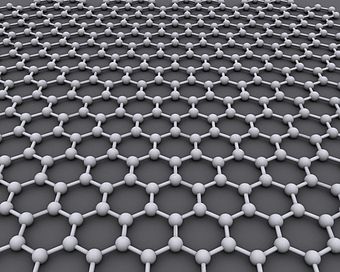
Dalam grafena, atom-atom karbon tersusun mendatar seperti bola bilyar di atas meja,. Mereka tersusun dalam rangkaian cincin segi-enam yang saling bergandengan sehingga menyerupai sarang lebah, dan membentuk lembaran tipis. Lembaran grafena ini sangat tipis hanya setebal satu atom, jadi hanya berdimensi dua, sejuta kali lebih tipis dari rambut manusia. Tumpukan 3 juta lapis grafena hanya setebal 1 mm. Begitu tipis dan ringannya sehingga kurang 1 gram grafena mempunyai luas permukaan lebih dari sebuah lapangan bola. Grafit adalah tumpukan dari jutaan lapis grafena, keduanya mempunyai struktur atom yang berbentuk cincin heksagonal. Berarti kita dapat memperoleh grafena dengan mengupas lapisan-lapisan grafit sampai memperoleh satu lapisan tunggal. Grafena mempunyai sekitar 20 keunikan yang super. Tiga diantaranya, ia 200 kali lebih kuat dari baja, lebih keras dari berlian, 1000 kali lebih konduktif dari Silikon.

Grafena adalah benda dua dimensi yang pertama ditemukan di dunia. Diramalkan bahwa perkembangan penemua grafena akan mengubah kehidupan manusia memasuki abad baru. Sampai 2004 grafena baru dapat dibuat dalam skala laboratorium. Sang penemu baru berhasil mencapai grafena setebal 10 lapis dengan mengupas grafit menggunakan scotch tape. Sepuluh tahun kemudian, Samsung Electronics berhasil membuat grafena satu lapis dengan diameter 30 inci. Diperkirakan dalam beberapa dekade mendatang grafena sudah akan merevolusi industry secara besar-besaran di banyak bidang termasuk energi, kedokteran, komputasi dan elektronik lainnya. Atom-atom hydrogen karena ukurannya yang lebih kecil dapat menembus membran grafena sehingga grafena dapat digunakan untuk mengekstrak hidrogen dari atmosfer, suatu perkembangan yang bisa membuka jalan untuk membuat pembangkit listrik tenaga hydrogen yang diserap dari udara. Dalam dunia kedokteran grafena digunakan dalam alat penyunting DNA untuk pengobatan kanker serta mengantar obat ketitik tertentu yang tersembunyi dalam tubuh manusia.

Grafena ditemukan 2004 oleh dua ilmuwan Universitas Manchester, Andre Geim dan Konstantin Novoselov. Mereka memenangkan hadiah Nobel 2010 dalam bidang fisika untuk eksperimen-eksperimen terobosan mengenai bahan dua dimensi grafena. Saat ini grafena sedang dalam tahap pengujian penggunaannya dalam (silahkan klik link-link ini!):
tintatransistorsayap pesawat terbang, chip komputerbateretouch screen yang lenturpelapis anti korosi, ban mobilpenawar air laut, peralatan pengaturDNA, headphonesraket tenisantenasel tenaga mataharicat, jendela, pengganti jaringan tubuh, sensor kamerapenginderaan gas, memperkuat bahan-bahan, dll. 

Bila abad ke 20 disebut zaman plastik, maka abad ke 21 dapat disebut zaman grafena. Tetapi sebelum semua aplikasi ini siap, para peneliti masih harus mengatasi berbagai tantangan seperti studi dari Univ. Brown yang mengatakan bahwa grafena termasuk bahan beracun bagi manusia. Belum lagi teknologi produksinya untuk mencapai harga ekonomis.  

18/02/16

RED ADAIR PENDEKAR LADANG MIGAS


RED ADAIR PENDEKAR LADANG MIGAS SEJATI
Oleh: Jum’an

Paul Neal Adair adalah anak seorang pandai besi dari Texas yang dilahirkan  pada tahun 1915. Akibat depresi ekonomi hebat di Amerika tahun 1930-an, bengkel ayahnya  tutup dan Paul terpaksa keluar dari sekolah (SMA) dan bekerja untuk membantu keluarga. Dia melakukan pekerjaan apa saja yang dapat mendatangkan uang. Sejak anak-anak ia sudah menyaksikan dahsyatnya kekuatan api di penempaan besi ayahnya. Gemuruh dan percikan api dari tungku dan landasan tempa mebuatnya tidak takut terhadap api. Dia dijuluki Red Adair karena warna rambutnya yang cerah kemerah-merahan.  Pada tahun 1945 setelah menyelesaikan dinas militer, ia bekerja pada Myron Kinley Company pelopor dalam bidang pengendalian kebakaran dan ledakan sumur minyak dan gas. Ia bekerja selama 14 tahun, membantu menangani kebakaran dan menyumbat semburan liar sumur-sumur migas. Pada th 1959 ia keluar dan mendirikan perusahaan sendiri The Red Adair Company. Dengan mengggabungkan ketrampilannya menjinakkan bom ketika dalam dinas militer serta pengalaman kerja di Kinley, Red Adair mampu menciptakan berbagai peralatan dan strategi untuk mengendalikan kebakaran dan ledakan pada sumur-sumur migas.

The Red Adair Company menjadi termasyhur diseluruh dunia dalam mengatasi kebakaran sumur minyak dan gas. Selama 36 tahun berbisnis, perusahaan itu telah menanggulagi lebih dari 2.000 kebakaran di seluruh dunia, di darat dan lepas pantai. Red Adair adalah seorang pemimpin dalam profesi khusus dan benar-benar berbahaya. Biasanya, bahan peledak, air atau lumpur dan semen yang digunakan untuk mematikan kobaran api. Ledakan bertindak memisahkan oksigen dari api. Setelah api padam, sumur perlu segera disungkup atau disumbat untuk menghentikan aliran minyak. Ini sangat berisiko karena bila ada sedikit saja api yang baru, dapat menyebabkan sumur yang bocor dan daerah sekitarnya meledak.

Pada tahun 1962 Red Adair menangani kebakaran di ladang gas di gurun pasir Aljazair. Sebuah sumur gas telah terbakar selama 6 bulan; setidaknya 550 juta kaki kubik gas habis terbakar setiap hari. Nyala apinya sampai terlihat oleh astronot John Glenn yang sedang mengorbit mengelilingi Bumi. Api yang luar biasa itu dijuluki Devil's Cigarette Lighter. Pasir di sekitar sumur meleleh menjadi gelas dari panasnya. Adair menggunakan air dalam jumlah besar untuk merendam daerah beberapa mil di sekitarnya dan kemudian mematikan api itu menggunakan 340 kg bahan peledak nitrogliserin untuk membebaskan oksigen dari api dan kemudian segera menutup sumur itu dengan lumpur dan semen. Peristiwa itu digambarkan dalam sebuah film Hollywood berjudul "Hellfighters" yang dibintangi oleh actor andalan John Wayne  dan Red Adai sendiri bertindak sebagai penasehat teknis dalam pembuatan film itu. Wayne bermain sebagai tokoh pemadam kebakaran sumur minyak dari Houston, Texas yang kehidupanna mirip dengan Red Adair. Keduanya menjadi teman dekat. Adair merasa sangat bangga menyaksikan John Wayne memainkan peran dirinya dalam sebuah film.

Pada tahun 1988, Adair berhasil  menangani bencana kebakaran lepas pantai terdahsyat di dunia diatas anjungan pengeboran Piper Alpha di Laut Utara yang mengumpul minyak dan gas dari 24 sumur. Sebanyak 167 orang tewas ketika platform itu meledak karena kebocoran gas. Red Adair harus menghentikan kebakaran dan mrnutup sumur-sumur itu. Dia menghadapi tiupan angin lebih dari 120 km/jam, dan gelombang laut setinggi lebih dari 20 meter. Red Adair menggunakan peralatan khusus dari kapal yang ia sendiri ikut merancang pembuatannya untuk memadamkan api dan menutup sumur-sumur itu. Setelah puing-puing disingkirkan, ia mulai memadamkan api dengan menggunakan nitrogliserin dan air laut.

Tahun 1991, dalam usia 75 tahun, Red Adair pergi ke Kuwait setelah Perang Teluk, untuk membantu memadamkan api yang sengaja dilakukan oleh tentara Irak ketika dipukul mundur oleh pasukan koalisi. Langit tertutup oleh asap hitam hingga ketinggian 15.000 kaki. Setiap hari 5 juta barel minyak, senilai 150 juta dolar terbakar. Di pusat kebakaran suhu mencapai 3000° F (cukup untuk melelehkan baja), sedangkan 15 meter disekitarnya suhu mencapai 1000° F. Red Adair mendapatkan kesulitan untuk mendatangkan peralatan yang ia inginkan, dan sekaligus, dari pemerintah terkait. Ia pulang ke AS untuk menjelaskan masalah itu kepada pejabat-pejabat pemerintah dan kongres. Dia menemui Presiden Bush Senior yang mendengarkan keprihatinannya dan menawarkan dukungan. Dalam beberapa minggu, Adair memperoleh semua peralatan dan bahan untuk menyelesaikan pekerjaan. Red Adair Company memadamkan lebih dari 100 sumur. Kerja keras mereka menyelamatkan jutaan barel minyak dan juga membantu mencegah tragedi lingkungan. Pekerjaan yang diperkirakan akan memakan waktu tiga sampai lima tahun telah selesai hanya dalam 8 bulan.

Warna merah rambut Adair menjadi trademark dari perusahaannya. Dia sendiri mengenakan pakaian dan sepatu merah. Dia mengendarai mobil merah, dan anggota krunya menggunakan truk merah dan peralatan bercat merah. Red Adair dikenal karena tidak mempunyai rasa takut. Ia juga dikenal karena rasa tenang dan sangat berhati-hati. Tak ada satu pun anak buahnya yang tewas saat memadamkan kebakaran di ladang migas. Meskipun diluarnya nampak flamboyan, Adair memiliki sisi lembut yang menonjol. Sebagian kekayannya dimanfaatkannya untuk membantu badan-badan amal, terutama yang ditujukan pada kesehatan anak-anak. Red Adair meninggal pada tanggal 7 Agustus 2004 pada usia 89 tahun Houston, Texas.

Red Adair menerima menerima surat-surat penghargaan dari Presiden Lyndon Johnson, Jimmy Carter dan George Bush. Salah satunya berbunyi begini: "Anda telah mengabdi kepada negara dengan baik dengan melakukan pekerjaan yang berbahaya dan penting dengan kemampuan yang langka. Di zaman yang dikatakan tidak ada pahlawan, Anda adalah seorang pahlawan sejati.."

08/02/16

BARITE PREVENTS BLOWOUTS, ABSORBS NUCLEAR EMISSION.


BARITE PREVENTS BLOWOUTS, ABSORBS NUCLEAR EMISSION.  
By: Jum’an

Bentonite clay as I wrote in my previous blog, has various uses and applications due to its unique swelling ability, colloidal size particles and thyxotrophic properties. Every mineral have their own specifics that renders their own field of applications. Barite or barium sulphate- has unique properties that define a wide range of industrial uses. It has high specific gravity, chemically inert and insoluble, low hardness (not abrasive) and ability to absorb X-rays. As a non metallic mineral, a density of 4, 2-4.5 g/cm3 is exceptional. These characteristics have made barite suitable for a wide range of industrial, medical and manufacturing applications.

About 80% world production of barite is used as weighting material in the formulation of drilling fluids.  Barite increases the hydrostatic pressure of the drilling fluids allowing it to compensate for high-pressure zones experienced during drilling and prevent blowouts. The softness of barite (3-3.5 on Moh's scale) makes it less abrasive and less damaging drilling tools during drilling. Another benefit of barite is that it is non-magnetic and thus does not interfere with magnetic measurements taken in the borehole. Substitutes for barite in drilling fluids include: ilmenite, hematite and galena. But none of these substitutes is effective at replacing barite in the market. They are too expensive or do not perform competitively. Specifications of barite for drilling mud purposes are established by the American Petroleum Institute (API).

Oil Well Blowout

Another unique feature of barite is its ability to strongly absorb X-rays and gamma rays. It is applied in diagnostic medical tests on the intestines and colon. If a patient drinks a small cup of liquid containing barite powder in a milkshake consistency (barium meal), the liquid will coat the patient's esophagus. An x-ray of the throat taken immediately after the "barium swallow" will image the soft tissue of the esophagus (which is usually transparent to x-rays) because the barium is opaque to x-rays and blocks their passage. This ability to absorb X-rays, barite is also used to make high-density concrete to block x-ray emissions in hospitals, power plants, laboratories and nuclear reactors. In addition, barite is the cheapest protective material in the construction of "burial grounds" and reactors in nuclear power industry.
Nuclear  Waste Burial 


Additional uses of barite include as filler in the manufacture of linoleum, oilcloth, paper and textile manufacturing, rubber, and plastics, brake linings, paint and sound-deadening material in cars. For those who love crystal healing, barite crystal is said as excellent in balancing the brain chemistry, assists with memory and information retention. It strengthens inner vision and is a strong stone to enhance dream recall.

05/02/16

BENTONITE CLAY: MINERAL OF 1000 USES


BENTONITE CLAY: MINERAL OF 1000 USES
By: Jum’an

You may be surprised! All Abrahamic religions Judaism, Christianity and Islam suggest in their scriptures that man was originally created from clay. Other mythologies including Greek, Egyptian, Inca, American Indian and Chinese mythology tell about the same creation. If the whole worlds mention the same single subject, there must be something very exceptional about this breed of mineral. The Daily Mail of UK wrote: Scientists believe that people may have had their beginnings in clay. According to the latest theory, clay acts as a breeding laboratory for tiny molecules and chemicals which it 'absorbs like a sponge'. The process takes billions of years, during which the chemicals react to each other to form proteins, DNA and, eventually, living cells.
Bentonite for Drilling Fluids 

The name Bentonite refers to a high water swelling clay first identified in Fort Benton, Wyoming where the best quality and most abundant sediments can be found. Bentonite clay formed by the alternation of volcanic ash for tens of millions of years during the late Cretaceous period. It is composed essentially of montmorillonite, also known as hydrous silicate of alumina. Long story short, the best bentonies is the sodium type or sodium montmorillonites. It has unique characteristics. It can swell up to 16 times its original size and absorbs up to 10 times its own weight in water. Its colloidal solution in water has a thyrotrophic or shear thinning property; semisolid (gel) when still and becoming fluid when stirred. These special properties of bentonite make it a valuable material for a wide range of uses and applications. Including as absorbents, cosmetics and pharmaceuticals, in drilling fluids, foundry (metal casting), civil construction, , pelletizing of iron ore and animal food, cat litter, detoxification, and many other industrial and consumer related products.

Slurry Trench

Bentonite is an essential ingredient of drilling fluids for oil, gas, geothermal and water well drilling. Its roles are mainly to seal the borehole walls, to remove drill cuttings and to lubricate the drill bit. In civil construction, bentonite is used to build slurry walls (slurry trench), waterproofing of underground walls and forming other impermeable barriers for example to plug old wells or as a base liner of landfills to prevent migration of contaminated water into the soil, to stop dam leakage etc. Bentonite is used as a sealant, such as to seal of undergound disposal of nuclear wastes and to isolate metal pollutants of groundwater. In foundry (metal casting) industry, bentonite is used as a bonding agent in the molding sand for the production of iron and steel. The unique properties of bentonite provide green sand moulds with good thermal stability and compactibility for the production of high quality castings. Bentonite is also used as a binding agent in the production of iron ore pellets. Iron ore fines are converted into spherical pellets, suitable as feed material in blast furnaces for pig iron production. Animal foods and fertilizer are pelletized using bentonite as well. So it makes sense why Holy Scriptures, mythologies and scientists agree that human was created from clay.


 Foundry ( Metal Casting)


30/01/16

LIVE SAVING INVENTION WITHOUT PATENT COVERAGE


LIFE SAVING INVENTION WITHOUT PATENT COVERAGE
By: Jum’an

Drilling Fluid is an important part in Oil and Gas drilling. In fact it is the only answer to the question: How to drill a small diameter hole thousands of meters deep, and at the same time cleaning and keeping it open without caving. Drilling Fluid is basically a type of slurry pumped down the hole while drilling, through the drill pipes to flush the drilled cuttings and some other duties, and circulated back through the annulus to the surface. There are similarities in the functions of the human blood and oil well drilling fluid. Blood eliminates waste products of metabolism from the human body. Drilling fluid removes drilling wastes, i.e. drilled cuttings from the hole. Blood helps to cool or warm the human body as drilling fluid helps to cool the drill bit and pipes. Blood circulates round the human body via an artery-vein system of connection and drilling fluid circulates down hole and back to the surface via a drill-string-annulus connection system. The mud pump resembles the heart in the oil well drilling. Human blood as well as drilling fluid is re-useable, both work continually. Blood contains white blood cells that defend the human body against diseases. Drilling fluid contains additives that strengthen the borehole, prevent formation damage and extend the life span of the drilling fluid. Testing a blood sample can detect our health condition. Testing a drilling fluid sample can tell us the safety condition of the well drilled.

Among the main functions of drilling fluid is to provide hydrostatic pressure to prevent formation fluids (gases, salt water) from entering into the well bore. Dissolved gases like Oxygen, Carbon Dioxide (CO2), and Hydrogen Sulfide (H2S) cause serious corrosion problems leading to metal failures. H2S in particular is critical because of its high toxicity and is fatal to workers when they breathe. H2S gas is ruthless and deadly hazards in the oil and gas industry. It is highly toxic, colorless and has the specific odor of rotten eggs. However the sense of smell is not a reliable warning because exposure to H2S gas will quickly numbs the sense of smell. Loss of consciousness can happen within seconds of exposure to a high concentration of this gas. The presence of H2S gas in the drilling fluid indicates that the gas from the formation enters into the well due to insufficient hydrostatic pressure provided by the drilling fluid. This toxic gas can then escape into the air, putting the personnel on the rig at risk. The only positive means of determining the amount of H2S present is by testing with approved detectors.

The Garrett Gas Train (GGT) is the most widely used portable unit to determine H2S in drilling fluid. The GGT unit consists of a transparent plastic block that contains three interconnected chambers. A carrier gas is used to flow an inert gas through the chambers. The sample is placed in the first chamber and is acidified to release the H2S gas. A special Draeger tube is used to measure the effluent gas that is evolved from the sample. The dark stain in the Draeger tube indicates that H2S has evolved from the sample. Mud Engineers are familiar to run this testing equipment. The device is named after Robert L. Garrett, who invented it while working at Exxon Production Research in the early 1970.
Robert L. Garrett

Born in 1933, Bob earned his master's degree in chemistry from Texas Tech University (TTU) in 1957. While working at Exxon in the early 1970s, Bob invented this device that would help save lives out in the oil fields – the Garrett Gas Train (GGT) – a reliable quantitative sulfide detector. H2S gas is a problem on drilling rigs, he said. The poisonous vapors could quickly kill employees and cause drill pipe to become brittle and break. An easy test for it didn’t yet exist. "I saw a serious need for a rig-site chemical test to clearly identify when an influx of sulfides came from the formation down hole and into the circulating drilling mud," Garrett said. "No reliable H2S test existed for rig use at that time – around 1970 – and lab tests available were too inconvenient for rig use." The device quickly detects dangerous and poisonous H2S when drilling oil and gas wells. This method is widely used on rigs and approved by the API and ISO. Garrett said that neither he nor Exxon attempted to obtain patent coverage on the GGT and neither he nor Exxon have ever obtained any royalty for use of the method.

"I looked on the GGT test device/method as a life-saving benefit for our industry – useful to avoid serious situations and hazards around the drilling rig," he said. "The whole industry benefits from safe drilling practices."  Currently Robert L. Garrett runs his company “Garrett Fluid Technology” based in Texas and served as chairman of several API committees.


27/01/16

THE RESURRECTION OF AVICENNA


THE RESURRECTION OF AVICENNA
By: Jum’an

Avicenna is Latinized articulation of Arabic name Ibn Sina. He was born in 980 AD in Afshana village in Uzbekistan, died 1037 at the age of 58 in Isfahan, Iran. His mother Setareh was from the very same village, while his father Abdulla was a respected Ismaili scholar from Afghanistan. Avicenna’s real name was Abu Ali al-Husain Ibn Abdullah Ibn Sina but he is commonly referred to under his Latinized name Avicenna. In the Muslim world, he is known as Ibn Sina. Avicenna was one of the most learned men of his time in a wide variety of subjects including mathematics, geometry, physics, metaphysics, philology, and astronomy. He is often considered one of the greatest thinkers and scholars in history. In particular, he is regarded by many as the father of early modern medicine

One of his monumental work completed in 1025 "The Canon of Medicine" (In Arabic Al-Qanun fi'l-Tibb), an immense medical encyclopedia, is one of the most famous and influential books in the history of medicine, forming the basis of our modern understanding of human health and disease. It presents an overview of the contemporary medical knowledge. This work was very popular not only in the Muslim world, but was also studied in European universities for centuries.  The Canon of Medicine remained a medical authority for centuries. It set the standards for medicine in Medieval Europe and the Muslim world, and was used as a medical textbook through the 18th century in Europe. Canon of Medicine is written in Arabic, the language of the science in the Middle East instead of Persian. It was translated into Latin (by Gerard of Cremona in the 12thcentury and was printed 15 times before 1500), Hebrew, Persian and Urdu. Yet many of the inaccuracies from those first translations remain in current English translations. Until 2013 when three prominent authors translated Canon of Medicine into English directly from the Arabic Avicenna’s texts, titled: AVICENNA'S MEDICINE: A New Translation of the 11th-Century Canon with Practical Applications for Integrative Health Care  By Mones Abu-Asab Ph.D., Hakima Amri Ph.D., Marc S. Micozzi M.D. Ph.D.


Mones Abu-Asab is a senior scientist at the National Institutes of Health in Bethesda, Maryland. Hakima is associate professor of biochemistry at Georgetown University and Marc S. Micozzi is professor of pharmacology at Georgetown University.  This new translation presents the actual words of Avicenna translated directly from the original Arabic, getting rid of the inaccuracies and errors of most translators, explains current medical interpretations and ways to apply Avicenna’s concepts today and reveals how Avicenna’s understanding of what known today as proteins, lipids, and organic acids. With this new translation, Avicenna's work becomes just as relevant today as it was 1,000 years ago. This is really a resurrection of Avicenna. Praises come from many medical experts and institutions for this book, published in 2013. To me the most touching one came from Larry Dossey, M.D., author of Healing Words and One Mind. He said: “The next time you visit your physician, whisper a prayer of thanks to Avicenna, because many of the foundations of modern medicine--empirical observation, objectivity, and rationalism--surfaced through his towering genius a millennium ago. Avicenna’s Medicine is a valuable link in medicine’s rich history. As the authors make clear in this marvelous translation, Avicenna’s relevance to our era has not been exhausted.”  The other praises you can read them here. A millennium after his life, Avicenna remains one of the most highly regarded physicians of all time. Thanks to the authors!